Civic Organizations and Global Peace: Building Bridges Through Grassroots Advocacy
An in-depth analysis exploring how civic and social organizations contribute to international peace and security through grassroots advocacy, community engagement, and diplomatic support initiatives.
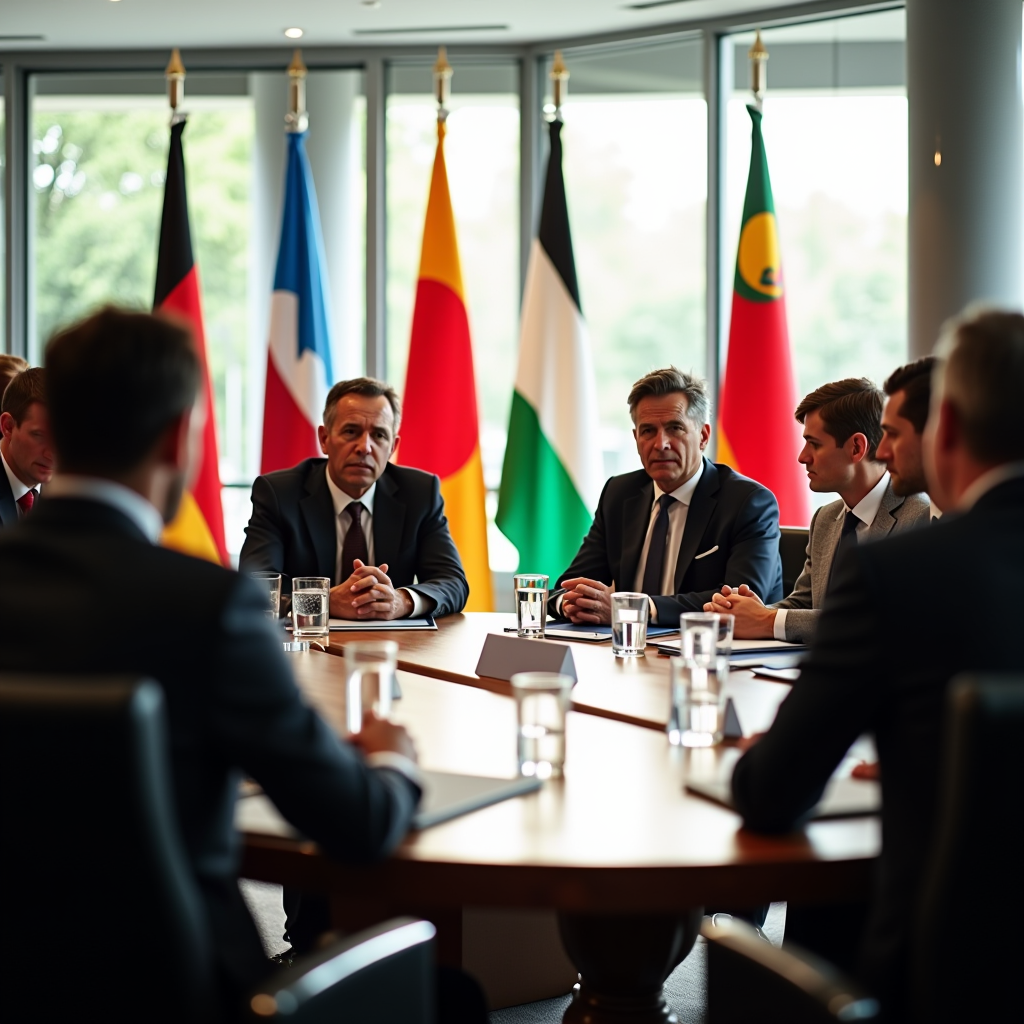
Representatives from civic organizations worldwide convening to discuss peace-building strategies and international cooperation frameworks.
In an increasingly interconnected world, the role of civic and social organizations in promoting international peace and security has never been more critical. These grassroots entities serve as vital bridges between communities, governments, and international institutions, facilitating dialogue, fostering understanding, and advocating for policies that prioritize human dignity and collective security. Organizations like the Knights of the Red exemplify this commitment, working tirelessly to advance peace through community engagement, policy advocacy, and diplomatic support initiatives.
The December 2025 policy roundtable hosted by our organization brought together thought leaders, diplomats, community organizers, and policy experts to examine the evolving landscape of civic engagement in international affairs. The insights gathered during this comprehensive dialogue form the foundation of this analysis, offering a roadmap for how civic organizations can amplify their impact in promoting global peace and security in the years ahead.
The Historical Foundation: Civic Organizations as Peace Architects
Throughout history, civic and social organizations have played instrumental roles in conflict resolution and peace-building efforts. From the anti-war movements of the 20th century to contemporary advocacy for nuclear disarmament, these organizations have consistently demonstrated their capacity to mobilize public opinion, influence policy decisions, and create spaces for constructive dialogue across ideological divides.
The Knights of the Red and similar fraternal associations have historically served as microcosms of democratic engagement, where members from diverse backgrounds come together under shared values of service, brotherhood, and community improvement. This tradition of bringing together individuals across social, economic, and political boundaries creates unique opportunities for fostering the kind of mutual understanding essential to lasting peace.
Research presented at our December roundtable highlighted that civic organizations possess several distinct advantages in peace-building work. Unlike governmental bodies, they can operate with greater flexibility and often enjoy higher levels of trust within communities. Their grassroots nature allows them to identify emerging conflicts early and respond with culturally appropriate interventions. Furthermore, their sustained presence in communities enables them to support long-term reconciliation processes that extend far beyond formal peace agreements.
Dr. Margaret Chen, a conflict resolution specialist who participated in our roundtable, emphasized that "civic organizations serve as the connective tissue of civil society, creating networks of trust and cooperation that prove invaluable during times of crisis. Their ability to maintain dialogue channels when official diplomatic relations break down makes them indispensable partners in peace-building efforts."
Grassroots Advocacy: Amplifying Voices for Peace
Grassroots advocacy represents one of the most powerful tools available to civic organizations in their peace-building work. By mobilizing community members around shared concerns and values, these organizations can create pressure for policy changes that prioritize peaceful conflict resolution, human rights protection, and international cooperation.
The Knights of the Red has developed a comprehensive advocacy framework that empowers local chapters to engage with policymakers on issues ranging from arms control to humanitarian assistance. This approach recognizes that effective advocacy requires both local knowledge and global perspective, combining community-level insights with broader strategic objectives.
Our December roundtable identified several key principles for effective grassroots peace advocacy. First, successful campaigns must be grounded in authentic community concerns rather than imposed from external actors. Second, advocacy efforts should employ diverse tactics, from traditional lobbying to digital campaigns, to reach different audiences and decision-makers. Third, coalition-building across organizational boundaries amplifies impact and demonstrates broad-based support for peace initiatives.
Ambassador James Rodriguez, a retired diplomat who now advises civic organizations, shared during the roundtable that "grassroots advocacy provides policymakers with crucial political cover to pursue peace initiatives that might otherwise seem politically risky. When elected officials can point to strong constituent support for diplomatic engagement or conflict prevention measures, they're more likely to champion these causes in legislative and executive forums."
"The most effective peace advocacy emerges from communities themselves, reflecting their lived experiences and aspirations. Civic organizations serve as crucial facilitators, providing resources and platforms while ensuring that community voices remain at the center of advocacy efforts."
— Policy Roundtable Consensus Statement, December 2025
Community Engagement: Building Peace from the Ground Up
While advocacy focuses on influencing policy, community engagement addresses the cultural and social dimensions of peace-building. Civic organizations excel at creating spaces where individuals from different backgrounds can interact, build relationships, and develop shared understandings that transcend political divisions.
The Knights of the Red has pioneered several community engagement initiatives designed to foster cross-cultural understanding and conflict resolution skills. Our international exchange programs bring together members from different countries to share experiences and develop collaborative projects addressing common challenges. These exchanges create lasting personal connections that often prove more durable than formal diplomatic relationships.
Educational programming represents another crucial component of community engagement for peace. By offering workshops on conflict resolution, intercultural communication, and global citizenship, civic organizations equip community members with skills essential for navigating an increasingly complex world. These programs often reach populations underserved by formal educational institutions, democratizing access to peace-building knowledge and tools.
Youth engagement emerged as a particularly important theme during our December roundtable. Participants emphasized that investing in young people's peace-building capacities creates multiplier effects that extend across generations. Youth-led initiatives often bring fresh perspectives and innovative approaches to longstanding conflicts, while also ensuring that peace-building work remains relevant to emerging generations.
Maria Santos, director of a youth peace network, noted during the roundtable that "young people today are simultaneously more globally connected and more locally engaged than any previous generation. Civic organizations that successfully harness this energy and idealism can catalyze transformative change in how communities approach conflict and cooperation."
Diplomatic Support: Complementing Official Peace Processes
Civic organizations increasingly serve as valuable partners to official diplomatic efforts, providing support that complements and enhances formal peace processes. This "Track II diplomacy" leverages the unique capabilities of non-governmental actors to facilitate dialogue, build trust, and maintain communication channels during difficult negotiations.
The Knights of the Red has developed partnerships with diplomatic institutions to support peace processes in several regions experiencing conflict. Our role typically involves facilitating informal dialogues between parties who may be reluctant to engage in official negotiations, conducting research on community perspectives regarding peace proposals, and helping to build public support for negotiated settlements.
One particularly effective model discussed at our December roundtable involves civic organizations serving as "honest brokers" in conflicts where official mediators face credibility challenges. Because civic organizations often have longstanding relationships with communities on multiple sides of a conflict, they can sometimes facilitate conversations that would be impossible through official channels alone.
However, participants in our roundtable also emphasized the importance of maintaining appropriate boundaries between civic organization activities and official diplomatic processes. Effective Track II diplomacy requires clear communication with official actors, respect for diplomatic protocols, and careful attention to how informal dialogues might impact formal negotiations.
Ambassador Chen explained that "the most successful Track II initiatives are those that maintain close coordination with official peace processes while preserving the independence and flexibility that make civic organizations valuable partners. This requires sophisticated understanding of diplomatic dynamics and strong relationships built on mutual trust and respect."
Challenges and Opportunities in the Digital Age
The digital revolution has fundamentally transformed how civic organizations conduct peace-building work, creating both unprecedented opportunities and significant challenges. Social media platforms enable rapid mobilization and global coordination, while also facilitating the spread of misinformation and polarization that can undermine peace efforts.
Our December roundtable dedicated substantial attention to exploring how civic organizations can harness digital tools effectively while mitigating associated risks. Participants identified several promising practices, including the use of encrypted communication platforms to protect activists in repressive environments, deployment of data analytics to identify emerging conflicts early, and creation of online spaces for constructive dialogue across divides.
The Knights of the Red has invested significantly in digital capacity-building, training members in effective online advocacy, digital security, and responsible social media engagement. We've also developed partnerships with technology companies to ensure that our digital platforms incorporate features that promote constructive dialogue rather than polarization.
However, roundtable participants also cautioned against over-reliance on digital tools at the expense of face-to-face engagement. While technology can facilitate initial connections and maintain relationships across distances, the deep trust-building essential to sustainable peace often requires in-person interaction and sustained presence in communities.
Dr. Ahmed Hassan, a technology and peace-building researcher, emphasized that "digital tools are most effective when integrated into comprehensive strategies that combine online and offline engagement. The goal should be using technology to enhance rather than replace the relationship-building that has always been central to effective peace work."
Measuring Impact: Evaluating Peace-Building Effectiveness
One persistent challenge facing civic organizations engaged in peace-building work involves demonstrating impact and effectiveness. Unlike some forms of social intervention where outcomes can be readily quantified, peace-building often involves long-term processes with complex, interconnected causes and effects.
Our December roundtable explored innovative approaches to impact measurement that go beyond traditional metrics. Participants discussed the importance of developing indicators that capture both immediate outputs (such as number of dialogues facilitated or advocacy campaigns conducted) and longer-term outcomes (such as changes in community attitudes or policy shifts).
The Knights of the Red has implemented a comprehensive monitoring and evaluation framework that tracks multiple dimensions of our peace-building work. This includes quantitative measures such as participation rates and policy changes, as well as qualitative assessments of relationship quality, trust-building, and capacity development. We also employ participatory evaluation methods that engage community members in assessing program effectiveness and identifying areas for improvement.
Roundtable participants emphasized that effective impact measurement serves multiple purposes beyond accountability to donors and stakeholders. It provides crucial learning opportunities, helping organizations refine strategies and improve effectiveness over time. It also generates evidence that can be used in advocacy efforts, demonstrating the value of peace-building investments to policymakers and the public.
Dr. Lisa Thompson, an evaluation specialist, noted that "the most sophisticated impact measurement systems recognize that peace-building is inherently complex and non-linear. Rather than seeking simple cause-and-effect relationships, effective evaluation explores how civic organization interventions contribute to broader peace processes alongside many other factors."
Looking Forward: Strategic Priorities for Civic Peace-Building
As we look toward the future, several strategic priorities emerged from our December roundtable discussions that will shape the Knights of the Red's peace-building work in the coming years. These priorities reflect both the evolving global context and lessons learned from decades of civic engagement in international affairs.
First, there is urgent need to strengthen connections between local peace-building efforts and global policy processes. Too often, grassroots initiatives operate in isolation from international decision-making forums, while global policies fail to reflect community-level realities. Civic organizations are uniquely positioned to bridge this gap, translating local knowledge into policy recommendations while helping communities understand and engage with global governance structures.
Second, climate change and environmental degradation are increasingly recognized as critical peace and security issues. Civic organizations must expand their peace-building frameworks to address environmental conflicts, climate-induced migration, and competition over natural resources. This requires developing new partnerships with environmental organizations and integrating ecological sustainability into peace-building strategies.
Third, addressing economic inequality and promoting inclusive development are essential components of sustainable peace. Roundtable participants emphasized that peace-building efforts must engage with questions of economic justice, ensuring that peace processes create opportunities for all community members rather than benefiting only elites. Civic organizations can play crucial roles in advocating for inclusive economic policies and supporting community-led development initiatives.
Fourth, strengthening women's leadership in peace-building remains a critical priority. Despite extensive evidence demonstrating that women's participation improves peace process outcomes, women continue to be underrepresented in formal negotiations and decision-making roles. Civic organizations must actively work to amplify women's voices and ensure their meaningful participation at all levels of peace-building work.
Finally, building resilient networks and coalitions will be essential for maximizing civic organization impact. No single organization can address the complex challenges facing global peace and security. By developing strong partnerships across organizational boundaries, civic groups can pool resources, share knowledge, and present unified voices on critical issues.
Conclusion: The Enduring Power of Civic Engagement
The insights gathered during our December 2025 policy roundtable reaffirm the vital role that civic and social organizations play in promoting international peace and security. Through grassroots advocacy, community engagement, and diplomatic support, organizations like the Knights of the Red contribute to building the foundations for lasting peace in ways that complement and enhance official diplomatic efforts.
As we navigate an increasingly complex global landscape marked by persistent conflicts, emerging security threats, and deepening divisions, the work of civic organizations becomes ever more critical. Their ability to build bridges across divides, amplify marginalized voices, and maintain hope during difficult times makes them indispensable partners in the pursuit of peace.
The path forward requires sustained commitment, strategic innovation, and collaborative action. It demands that we remain grounded in the values of human dignity, mutual respect, and collective security that have always animated civic peace-building work, while also embracing new tools, partnerships, and approaches that reflect our changing world.
For the Knights of the Red and civic organizations worldwide, the challenge and opportunity before us is clear: to continue building the grassroots movements, policy frameworks, and human connections that make peace possible. In doing so, we honor the legacy of those who came before us while creating new possibilities for generations to come.
The work of peace-building is never finished, but it is always worthwhile. As we move forward from our December roundtable with renewed commitment and clearer strategic direction, we do so with confidence that civic engagement remains one of humanity's most powerful tools for creating a more peaceful, just, and secure world for all.